
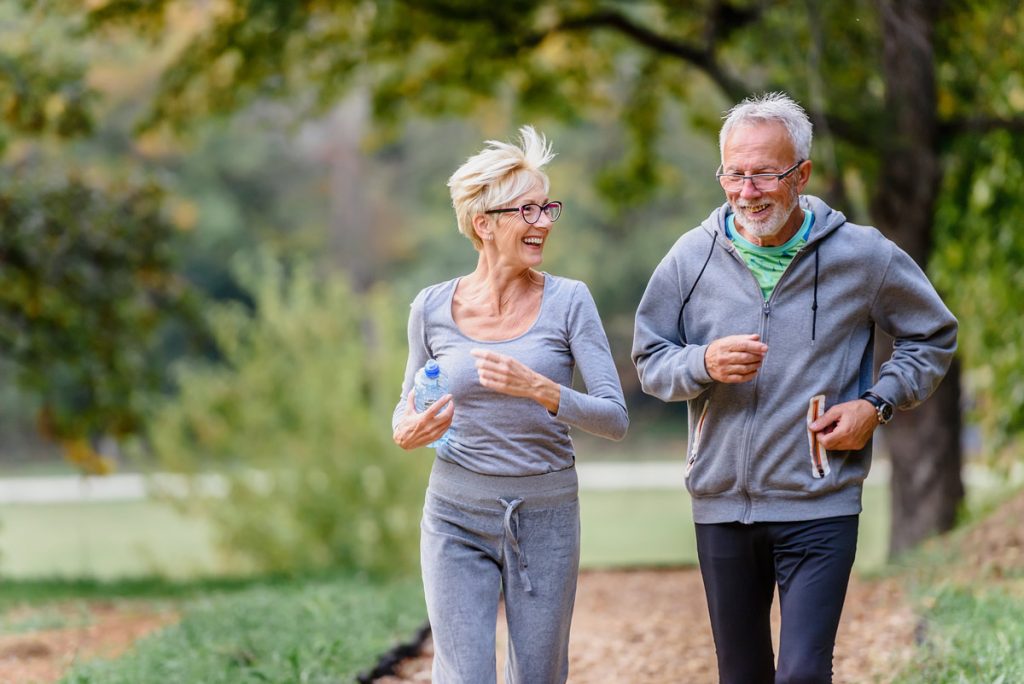
Build Resilience, Age Stronger: A New Approach to Performance and Healthy Aging
When most people hear the word sports medicine, they picture competitive athletes.
But today’s athlete may be 65. Or 72. Or 80.
Maybe you’re playing tennis several days a week. Maybe you golf. Maybe you strength train. Maybe you cycle, swim, hike, travel, practice yoga, or play pickleball.
Or maybe your goal is simply to walk comfortably, stay independent, and continue saying “yes” to the things you enjoy.
That is performance too.
At AcuSportsTherapy in Delray Beach, we’re expanding the traditional idea of sports medicine into something broader:
Helping active adults build the resilience to keep moving, recovering, and participating in life as they age.
Healthy Aging Is About More Than Living Longer
Longevity gets a lot of attention.
But lifespan alone does not tell the entire story.
Most people also care about healthspan—the years during which they remain strong, mobile, independent, and able to participate in meaningful activities.
For an active adult, that may mean:
- Playing tennis without constantly worrying about the shoulder
- Traveling without being limited by back pain
- Maintaining enough strength to stay independent
- Walking confidently
- Keeping good balance
- Continuing to exercise
- Recovering effectively from physical activity
That is why healthy aging should not be viewed as passive.
It is something we actively build.
Strength Becomes More Important With Age
Muscle isn’t simply for appearances.
Muscle helps support:
- Mobility
- Joint stability
- Balance
- Bone health
- Metabolic function
- Daily activities
- Independence
Current international consensus recommendations for healthy longevity emphasize exercise—particularly progressive resistance training—because of its role in maintaining strength and functional capacity in older adults.¹
Resistance-based exercise is also a first-line recommendation for sarcopenia because it can improve strength, muscle mass, and physical function.
That means strength training is not something you “age out of.” ²
For many people, it becomes even more important.
But Training Is Only Half the Equation
Exercise creates the stimulus. Recovery creates the adaptation. This principle becomes increasingly important as we age.
The goal is not necessarily to train less. The goal is to become more strategic about the relationship between:
Training + Recovery + Adaptation
Recovery may include:
- Adequate sleep
- Appropriate rest between harder workouts
- Protein and overall nutrition
- Hydration
- Stress management
- Mobility
- Appropriate training progression
The smartest older athlete is often not the person who pushes hardest. It may be the person who understands when to push—and when to recover.
Your Nervous System Is Part of Healthy Aging
Movement begins in the nervous system.
Your brain and nervous system coordinate virtually everything you do physically:
- Walking
- Balance
- Strength
- Coordination
- Reaction
- Muscle recruitment
- Posture
- Fine motor control
That makes neurological function highly relevant to active aging. This is one reason Neuropuncture integrates naturally into the AcuSportsTherapy approach.
Neuropuncture applies neuroscience and electro-acupuncture principles to the acupuncture model, with a focus on neurological regulation and neuro-modulation.³
For an active adult, this lets us look beyond the sore muscle and think more broadly about the brain–nerve–muscle relationship.
Pain Can Change Much More Than the Painful Joint
Imagine someone develops knee pain at 66. They stop playing tennis. Then they reduce walking because the knee bothers them. Because they move less, their legs become weaker. Their confidence decreases. Balance begins changing. Eventually, the original problem is no longer just a knee problem. It has affected activity, conditioning, confidence, and lifestyle. This is why maintaining movement can be such an important part of healthy aging. Pain relief matters.
But sometimes the larger goal is:
Protect the person’s ability to remain active.
Sports Medicine Isn’t Just for 25-Year-Old Athletes
If you’re serious about your body, sports-medicine principles still matter whether you compete or not.
Sports medicine can help us examine:
- Joint function
- Muscle strength
- Mobility
- Movement patterns
- Recurrent injuries
- Training demands
- Recovery
- Functional goals
Sports Acupuncture treatment serves injury recovery, prevention, performance, and nervous-system function rather than limiting sports care to elite athletes. ⁴
That philosophy is especially relevant to active aging.
Your sport doesn’t have to be professional.
Your goal simply has to matter to you.
Functional Medicine Broadens the Healthy-Aging Conversation
Healthy aging is not purely musculoskeletal.
Metabolic health matters too.
That’s where Functional Medicine creates another layer.
Depending on the individual, we may need to consider:
- Protein intake
- Micronutrient status
- Blood-sugar regulation
- Digestive health
- Sleep
- Energy
- Cardiometabolic health
- Stress
- Recovery capacity
Nutrition is particularly relevant because adequate nutritional strategies support both performance and recovery. ⁵
As we age, maintaining the internal environment that supports movement becomes increasingly important.
Think in Terms of Resilience
Resilience may be one of the best words for what active aging should accomplish.
Physical resilience means being able to experience stress and recover.
It means:
Training and adapting.
Taking a long trip and bouncing back.
Having a difficult week without completely falling apart physically.
Recovering from a minor injury.
Maintaining enough reserve to handle the unexpected.
And continuing to participate in life.
That is more meaningful than chasing youth.
The Three-Lens AcuSportsTherapy Model for Healthy Aging
Lens 1: Sports Medicine — Structure & Movement
We look at:
- Strength
- Mobility
- Joint function
- Muscle function
- Pain
- Movement
- Activity-specific demands
Lens 2: Neuropuncture — Nervous System
We consider:
- Neurological regulation
- Motor pathways
- Pain processing
- Muscle activation
- Nervous-system function
Lens 3: Functional Medicine — Internal Health
We broaden the discussion to:
- Nutrition
- Metabolic health
- Sleep
- Stress
- Energy
- Recovery
None of these systems exist independently.
They work together.
Healthy Aging Doesn’t Mean Taking It Easy
There is an outdated idea that getting older automatically means slowing down. Sometimes slowing down is necessary. But aging does not automatically mean giving up challenging activity.
The better question is:
How do we help your body remain capable of doing what you love?
For one person, that may mean tennis. For another, golf. For another, strength training.
For someone else, it may simply mean getting on and off the floor confidently or walking through an airport without worrying about pain.
The goal is personal.
The principle is the same:
Maintain capacity.
Active Aging Care in Delray Beach
At AcuSportsTherapy in Delray Beach, we believe performance has no expiration date.
Our evolving approach combines:
Sports Medicine Acupuncture
for movement, pain, and musculoskeletal function.
Neuropuncture
for the nervous system.
Functional Medicine
for nutrition, metabolic health, recovery, and the internal environment.
The goal isn’t simply adding years.
It’s helping you maintain enough strength, mobility, resilience, and confidence to use those years well.
Build resilience. Age stronger. Keep doing what you love.
If you are an active adult who wants to remain strong, mobile, and engaged as you age, contact AcuSportsTherapy in Delray Beach to learn more about our integrated approach.
References
- Izquierdo M, et al. Global consensus on optimal exercise recommendations for enhancing healthy longevity in older adults. Journal of Nutrition, Health & Aging, 2025. PubMed Central (PMC)
- International Clinical Practice Guidelines for Sarcopenia. Screening, Diagnosis and Management. Resistance-based training is strongly recommended for improving strength and physical function in sarcopenia. PubMed Central (PMC)
- Neuropuncture. The Complete Neuroscience Electro-Acupuncture System. Neuropuncture
- AcuSportsTherapy. Recovery Is the New Performance: How Sports Medicine Acupuncture, Neuropuncture and Functional Medicine Can Help You Perform Better. AcuSports Therapy
- Thomas DT, Erdman KA, Burke LM. Nutrition and Athletic Performance. Academy of Nutrition and Dietetics, Dietitians of Canada & ACSM Joint Position Statement. PubMed


Most Commented